

Epithalon (Epitalon) Research Peptide: Structure, Mechanism & Technical Data
Epithalon (also spelled epitalon; CAS 307297-39-8) is a synthetic four-residue peptide, Ala-Glu-Asp-Gly (AEDG), based on epithalamin, a peptide extract of the pineal gland. It is studied mainly in telomere and aging-biology research. This page is a laboratory reference covering its structure, molecular data, research background, handling, storage and testing. For research use only. Not for human or veterinary use.
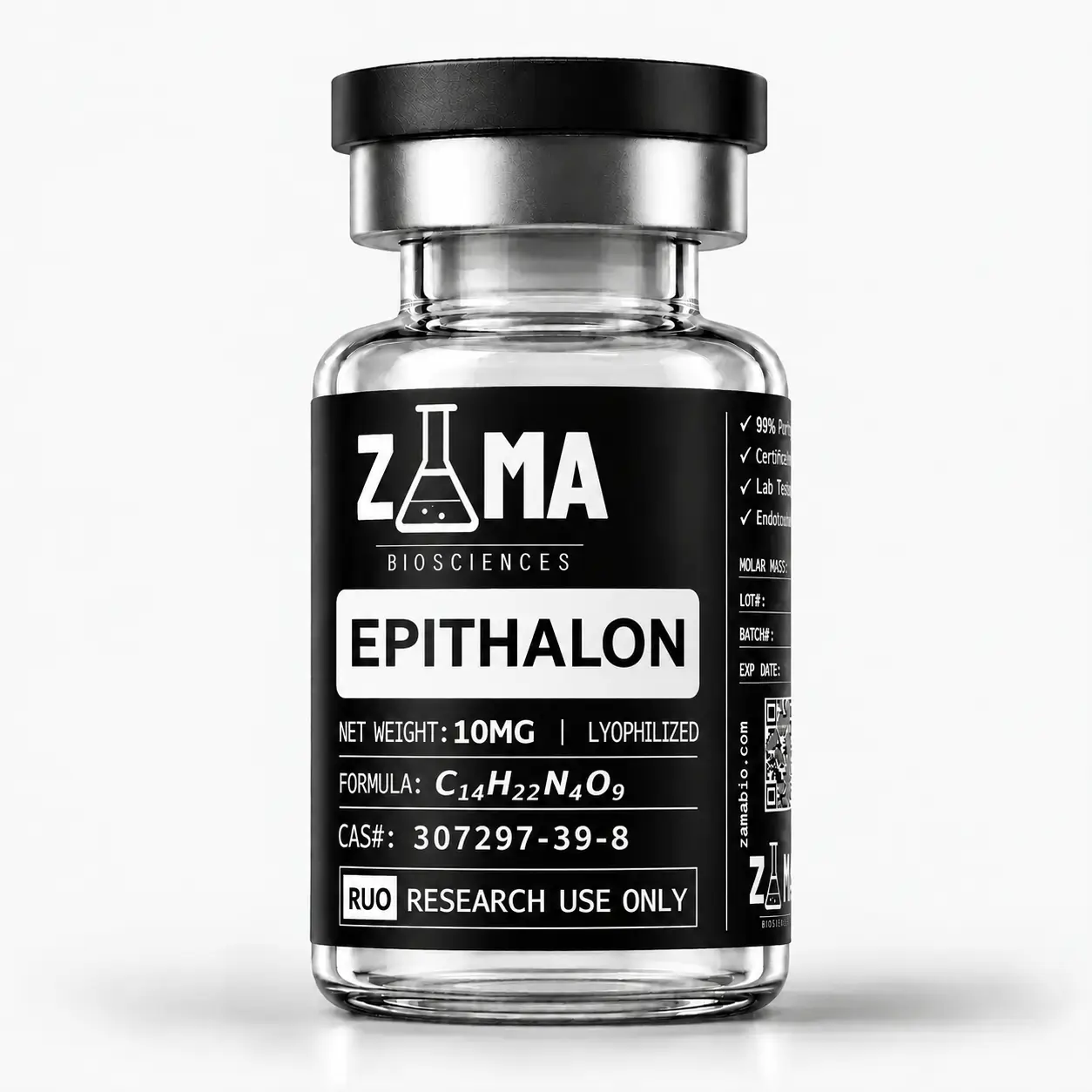
| Compound | Epithalon (epitalon, AEDG peptide) |
| CAS number | 307297-39-8 |
| Sequence | Ala-Glu-Asp-Gly (AEDG) |
| Molecular formula | C14H22N4O9 |
| Molecular weight | ≈ 390.3 g/mol |
| Zama formats | Epithalon; NA-Epithalon Amidate (N-acetyl, C-terminal amide variant) |
| Purity specification | ≥ 99% by HPLC, identity by mass spectrometry, lot-matched COA |
What is epithalon?
Epithalon was developed by Vladimir Khavinson and colleagues at the St Petersburg Institute of Bioregulation and Gerontology as a short synthetic analog of epithalamin. It belongs to a group of very short peptides the group calls “peptide bioregulators”, proposed to act on gene expression. Most of the published research comes from this group.
Epithalon is not an approved medicine. Research-grade epithalon is a laboratory reagent.
Structure
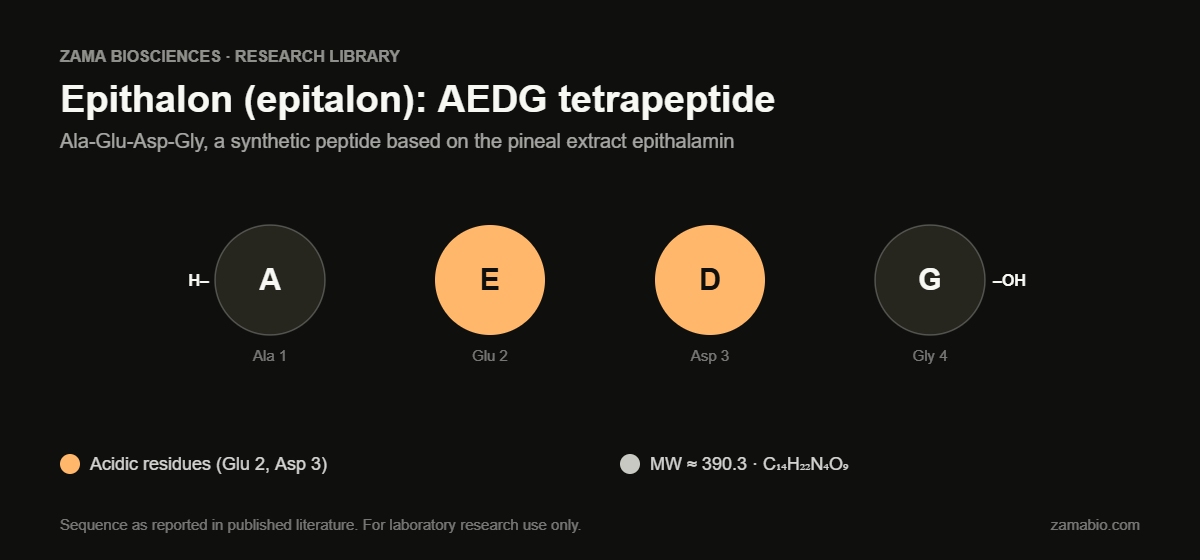
Epithalon is one of the smallest peptides in research use: alanine, glutamic acid, aspartic acid and glycine, with free N- and C-termini. Two acidic residues make it negatively charged at neutral pH. The NA-Epithalon Amidate variant adds an N-terminal acetyl group and a C-terminal amide, changes commonly used to increase resistance to enzymatic breakdown.
Research background
- Telomerase activity. A 2003 cell study reported that epithalon induced telomerase activity and telomere elongation in cultured human somatic cells (Khavinson et al., Bulletin of Experimental Biology and Medicine).
- Aging biomarkers in mice. Long-term rodent studies examined biomarkers of aging, lifespan and spontaneous tumor incidence (Anisimov et al., Biogerontology, 2003).
- Pineal and circadian research. Studies have looked at melatonin-related endpoints, reflecting its pineal origin.
Most of this literature comes from one research group and independent replication is limited. Animal and cell results cannot be assumed to translate directly to people.
Handling and storage
- Epithalon is water-soluble. Reconstitute with sterile water or buffer and swirl gently.
- Store powder sealed at −20 °C; keep solutions at 2–8 °C short term or frozen in aliquots.
How Zama epithalon is tested
- HPLC purity and mass spectrometry identity (about 390.3 Da for AEDG; higher for the acetylated, amidated variant).
- Lot-matched COA in the COA Library.
Frequently asked questions
What is epithalon?
A synthetic tetrapeptide, Ala-Glu-Asp-Gly, based on the pineal extract epithalamin and studied in telomere and aging research.
Is epithalon the same as epitalon?
Yes. They are alternative spellings of the same peptide.
What is NA-Epithalon Amidate?
A modified version with an N-terminal acetyl group and C-terminal amide, changes commonly made to improve stability.
Researcher access
Epithalon and NA-Epithalon Amidate are available to registered researchers. Sign in or create your researcher account to view Epithalon →
Related research guides: NAD+ · MOTS-c · Full Research Library
References
- Khavinson VKh, Bondarev IE, Butyugov AA. Epithalon peptide induces telomerase activity and telomere elongation in human somatic cells. Bulletin of Experimental Biology and Medicine. 2003;135(6):590–592.
- Anisimov VN, Khavinson VKh, Popovich IG, et al. Effect of Epitalon on biomarkers of aging, life span and spontaneous tumor incidence in female Swiss-derived SHR mice. Biogerontology. 2003;4(4):193–202.
Research Use Only. Epithalon and all products referenced are sold strictly for in-vitro laboratory research. They are not drugs, supplements or medical devices, and are not for human or veterinary use. This page summarizes published literature and makes no claim about any product. Statements have not been evaluated by the FDA.