The ZamaResearch Blog
Peptide chemistry, handling and reconstitution, third-party purity testing and how to read a Certificate of Analysis — written for researchers who work to analytical standards.

Peptide Stability: How Research Peptides Degrade and How to Prevent It
Why lyophilized and reconstituted peptides lose quality over time: oxidation, deamidation, hydrolysis, aggregation and adsorption, which residues are most at risk, and the storage and handling steps that slow each one. Laboratory reference.
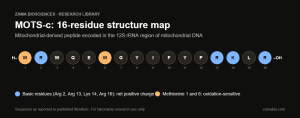
MOTS-c Research: What the Studies Show
A plain-language review of the published research on MOTS-c, the mitochondrial-derived peptide: its discovery, AMPK and folate-cycle signaling, nuclear translocation under stress, exercise studies, and the limits of the evidence. Research use only.

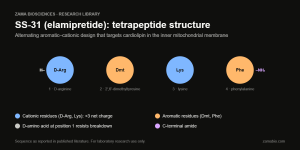
SS-31 (Elamipretide) Research: What the Studies Show
A plain-language review of the published research on SS-31 (elamipretide): how it targets cardiolipin in the inner mitochondrial membrane, what cell and animal studies report, its 2025 FDA accelerated approval for Barth syndrome, and open questions. Research use only.

Net Peptide Content vs Purity: What the Numbers on a COA Mean
Net peptide content vs HPLC purity: why a 99% pure peptide is not 99% peptide by weight, what counterions and water contribute, how NPC is measured, and how to use it for accurate concentrations. Research use only.

Endotoxin Testing for Research Peptides: LAL and rFC Explained
Endotoxin testing for research peptides: what endotoxins are, why they matter in cell-based research, how LAL and recombinant Factor C (rFC) tests work, EU units and how to read results on a COA. Research use only.

How Research Peptides Are Made: Solid-Phase Peptide Synthesis (SPPS) Explained
How research peptides are made: solid-phase peptide synthesis (SPPS) step by step, Fmoc chemistry, cleavage, HPLC purification, lyophilization, salt forms and the impurities each step can introduce. Research use only.

Bacteriostatic Water vs Sterile Water for Peptide Research
Bacteriostatic water vs sterile water in the peptide lab: what each contains, when to use which diluent, how benzyl alcohol can affect assays, and good reconstitution practice. Research use only.

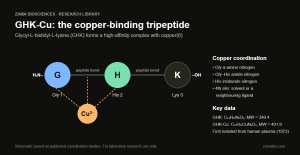
GHK-Cu Research: What the Studies Show
A plain-language review of the published research on GHK-Cu: its discovery in plasma, copper binding, extracellular-matrix and gene-expression studies, the limits of the evidence and open questions. Research use only.

TB-500 (Thymosin Beta-4) Research: What the Studies Show
A plain-language review of the published research on TB-500 / thymosin β4: its role as an actin-binding protein, what cell and animal studies report, the clinical research history, and open questions. Research use only.